
REVIEW — “Power Ballad”

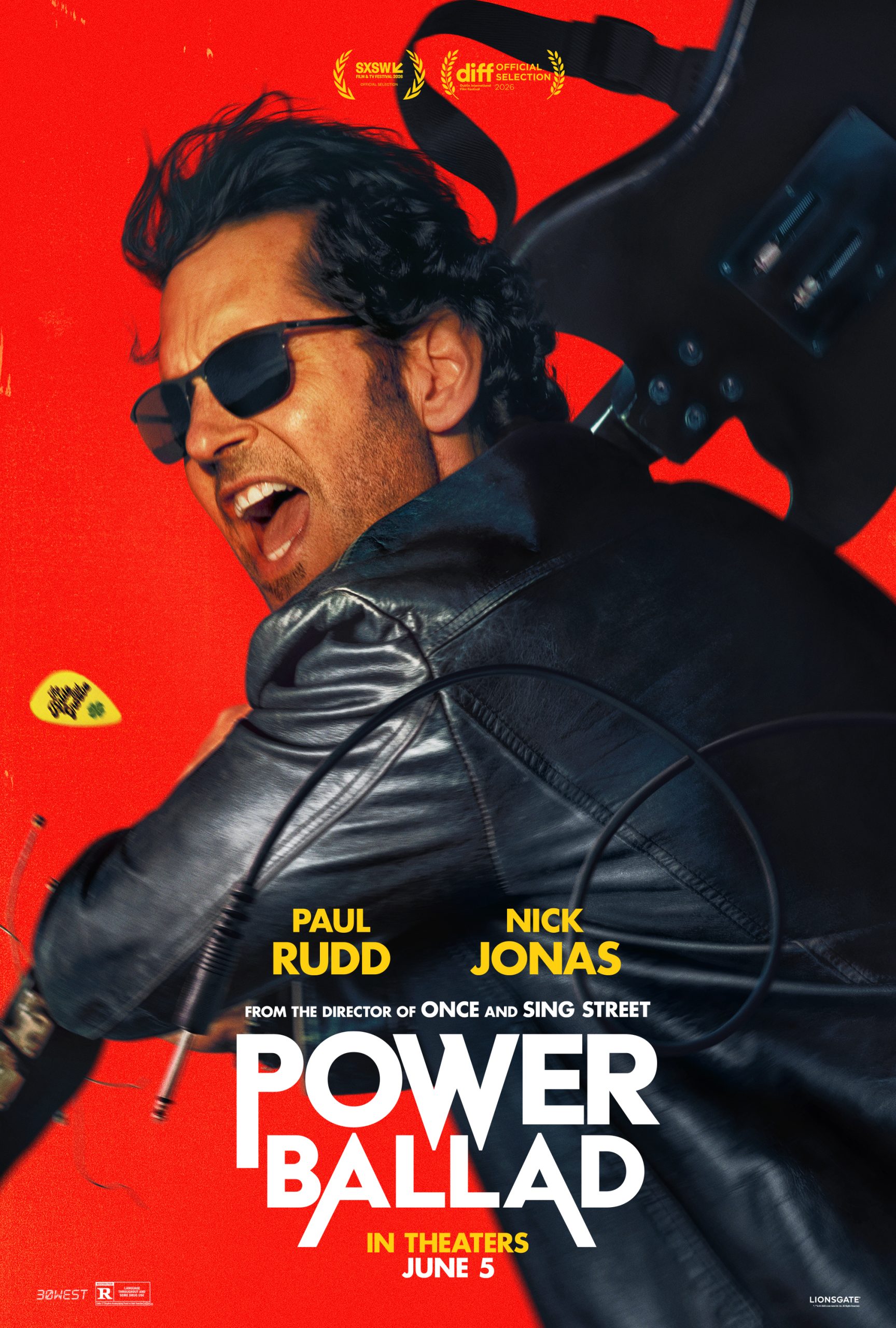
While other filmmakers go for impactful-but-emotionally-cheap needle drops, John Carney is the rare director who uses music as a profound, living language that deepens the subtext of his films. Having achieved wide acclaim for the raw acoustic intimacy of Once, the crowd-pleasing anthems of Sing Street and the bittersweet bangers of Begin Again, Carney is back with his latest film, Power Ballad. Here, the director delivers what might be his most incredibly satisfying, soul-stirring film yet.
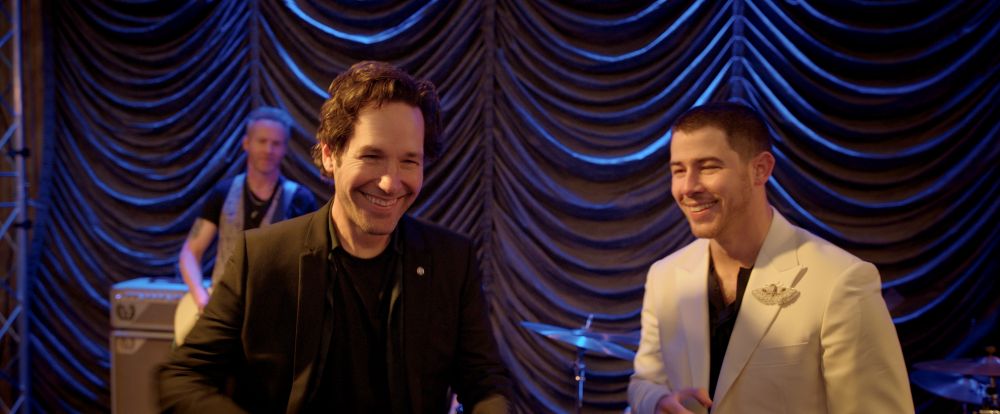
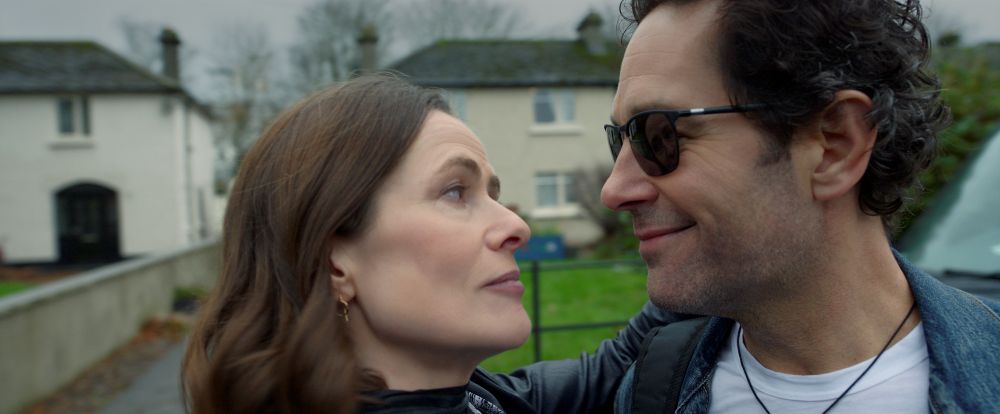
The film centers on past-his-prime wedding singer, Rick Power, played with astonishing, vulnerable brilliance by Paul Rudd. Once a rising American rock star, Rick had to put his superstardom dreams on hold after becoming a father while on tour in Ireland. Now a devoted family man and occasional songwriter, Rick supports his wife (Marcella Plunkett) and teenage daughter Aja (Beth Fallon) by gigging at weddings in and around Dublin as the “human jukebox” front man for cover band, “The Bride and Groove.” Rick is a man living at a major emotional crossroads, caught between two eras of his life and two different versions of fulfillment. He loves his family, but there’s a quiet, simmering insecurity inside him—a nagging doubt that his best days are behind him.
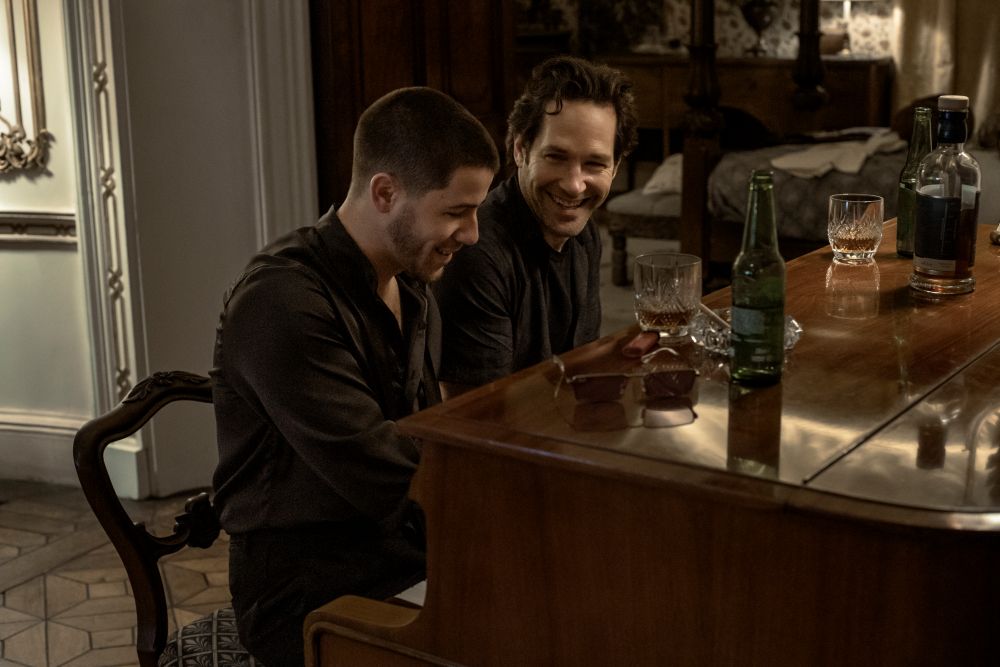
During a gig at an upscale estate, Rick has a chance meeting with young pop star and former-boy-bander, Danny Wilson (Nick Jonas), whose solo career has left him entirely isolated, both on and off the stage. The two musicians bond over their love of music during a drunken, late-night jam session. Their instant camaraderie and the on-screen chemistry between Rudd and Jonas paves the way for a phenomenal, bromance-turned-frenemy dynamic once Rick learns, months later, that Danny has stolen one of Rick’s unfinished songs and turned it into a massive pop hit that is reigniting Danny’s fading solo career.
With no recordings or legal proof that he wrote the song, Rick sets out to reclaim his voice and the recognition he believes he deserves, even if it means risking everything he cares about. The film spirals into an intensely personal duel between the two artists. What follows is a hilarious and emotional misadventure that takes Rick and his loyal bandmate Sandy (co-writer Peter McDonald) from the cozy suburbs of Ireland to a wild Los Angeles party to confront Danny and claim what is rightfully his.

The tension between the two actors is electric, because, underneath the rivalry, both Rick and Danny are desperately searching for the exact same thing: validity. As the story illustrates, Power Ballad is about two men standing on opposite sides of fame, both essentially crying out for acceptance, to know that they’re enough. For whichever man can rightfully claim the song, the credit isn’t just about fame, money and industry accolades; it’s proof that their biggest dreams and ambitions still matter.

Carney knows exactly how to weave music into his films, allowing songs to say the things his characters can’t voice with words. This tactic was used in the 2007 Academy Award® winning best song “Falling Slowly” from Once, and it is evident again in the soaring ballad that lies at the heart of this film, “How To Write A Song Without You.” The true genius of the song, and the movie itself, lies in how the lyrics are interpreted.
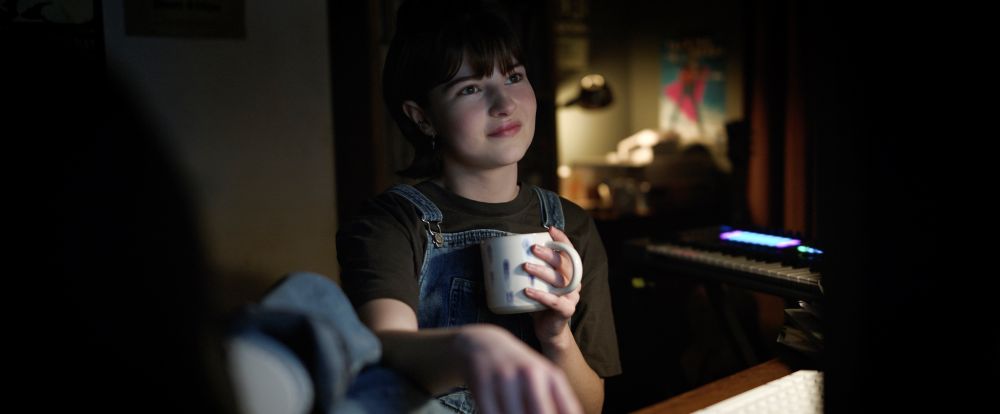
To Rick, the song is an aching, beautiful tribute to his daughter, Aja, representing the sacrifices and unconditional love of fatherhood. To Danny, the song is a desperate romantic plea connected to his girlfriend, Marcia (Havana Rose Liu). When that ballad swells, it carries the weight of both men’s lives, and it is impossible not to get goosebumps. Carney and co-writer Gary Clark expertly tailored this and other songs to fit the exact vocal ranges and artistic strengths of both actors.

Known as an effortlessly charming, ageless funnyman, Rudd taps into something raw and deeply moving in Power Ballad, striking his most emotionally resonant chord to date. While he is operating entirely in his wheelhouse, he pushes into uncharted dramatic territory as a father and musician. What makes his performance even more joyful to watch is that Rudd’s real-life musical talents are on full display. The man can actually sing, evident in his Tonight Show music video recreations with Jimmy Fallon, so you can practically feel his lifelong passion pouring out of the screen. Here, he isn’t just playing a rock star; he is living out a dream, and that translates into a revelatory performance.
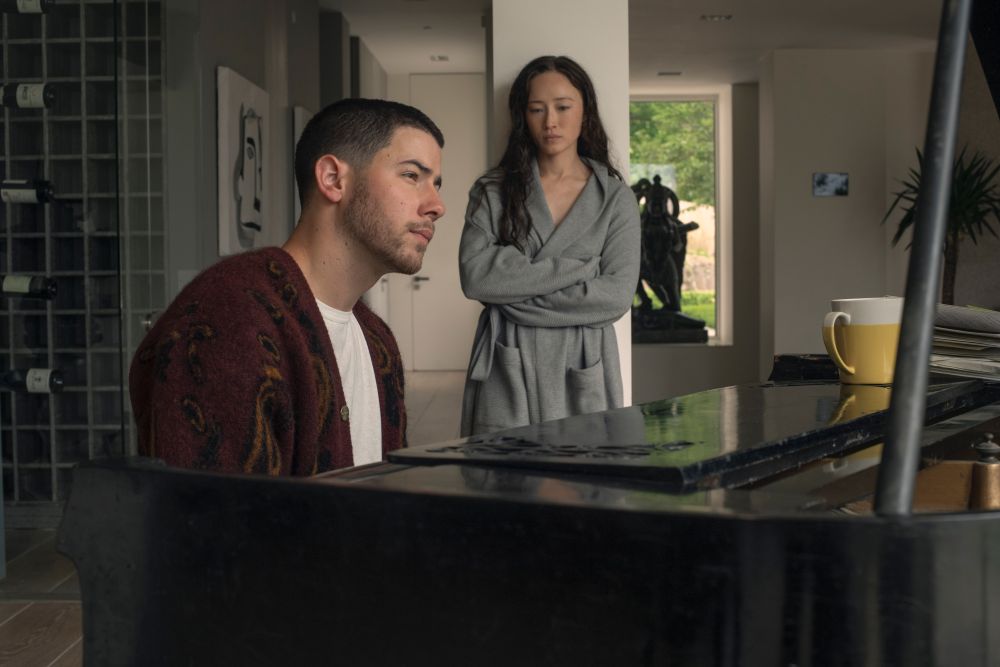
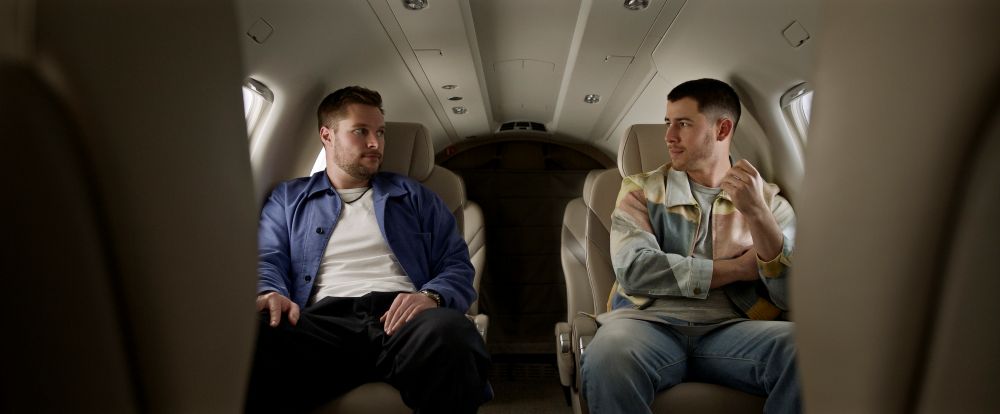
On the flip side, Nick Jonas turns in career-best work as Danny. Mirroring his own life as a former boy bander and evolving solo artist, Jonas brings a deeply personal understanding to the role, lending an air of authenticity to Danny’s desperation to be more than a flash in the pan. And Jonas doesn’t play Danny as a cartoonish villain either. Instead, he shows us a young man who has a genuinely guilty conscience for taking Rick’s song; however, he is treading water in an ocean of celebrity and must do what he can to stay afloat, support his lifestyle, and maintain relevance, and satisfy his label manager Mac, an unapologetically smarmy Jack Reynor.
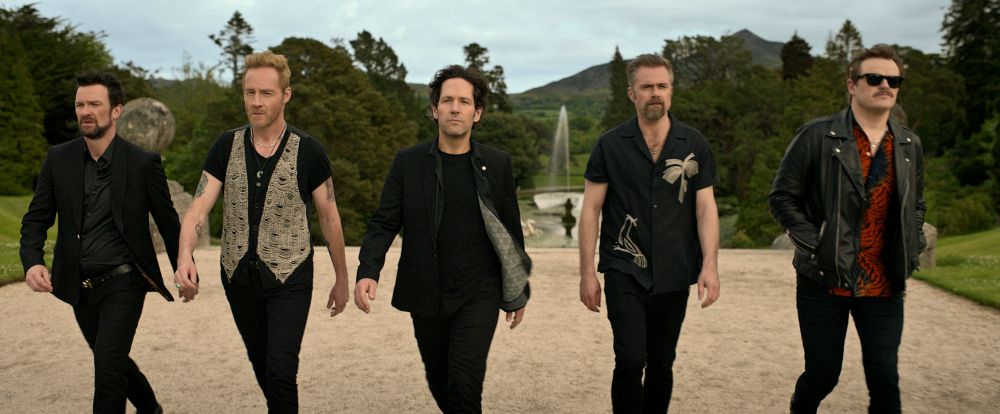
While the central rivalry drives the plot, Power Ballad is grounded by an incredibly solid supporting cast that gives the film its rich, emotional warmth. Rick’s wedding band feels like a real, breathing unit, capturing that specific, lived-in tension unique to lifelong musicians. McDonald is magnificent as Sandy, Rick’s fiercely loyal best friend and guitar player. The ultimate wingman, Sandy provides both comic relief and a steady emotional anchor when Rick decides to fly across the world to fight for his music.
Equally impactful is Rick’s family. Plunkett plays Rick’s wife, Rachel, with a strength and stability that feels wonderfully honest to the realities of marriage. But it’s Fallon as Rick’s teenage daughter Aja who is the emotional bedrock of the film. While their similarities make them clash, Aja’s protective love for her dad shines through exactly when Rick needs it most, and it is their bond that keeps the film’s heart beating.

While the battle over the song provides the film’s thrilling, high-stakes momentum, the true emotional engine of Power Ballad is Rick’s profound personal journey. At the start of the film, Rick is haunted by the ghost of the career he never had. He gave up his youthful rock-and-roll fantasies to stay in Ireland and accept his role as father and husband—a choice made out of love, but one that left him feeling unfinished and overlooked. When Danny steals his work, it forces Rick to confront those buried resentments head-on. However, Rick’s journey ultimately becomes a lesson in perspective and acceptance that forces him to look closely at what is already working in his life and find a way to appreciate it. The big revelation for Rick is that the life he thought was not enough for him was really his best life all along. The love, stability, and community he had made in Ireland is all he ever really needed. And once he realizes where his world exists, the universe rewards him.

An absolute joy to experience, Power Ballad is a beautifully human story about ambition, connection, acceptance, and what it truly means to reclaim your voice when you feel like the world has stopped listening. It is a movie designed to be shared with an audience to feel the collective emotions rise as the music swells. A triumphant, deeply satisfying reminder of the magnificent power of song, Power Ballad will leave you humming its melody long after the credits roll. 4.5/5
Rated R with a running time of 1 hour and 38 minutes, Power Ballad opens only in theaters on June 5, 2026.

The Author All posts




No Comment